

Written by Dastem
I took some time off over the past few months to enjoy the bounties of summer. Yet, even after school started back up, I’ve had trouble getting back into the swing of writing every day. Some might call it ‘writer’s block’.
The truth, however, is that there’s no shortage of topics to discuss when it comes to issues facing today’s society. In fact, I’d say there’s too much to write about, and that’s the problem!
I figured it’d be impossible to find the “center” in any of the issues we’ve been seeing in the news, though. So, I decided to look past the headlines and into the depths of the human heart, instead.
Toward that end, I submit to you the following conversation for your consideration–
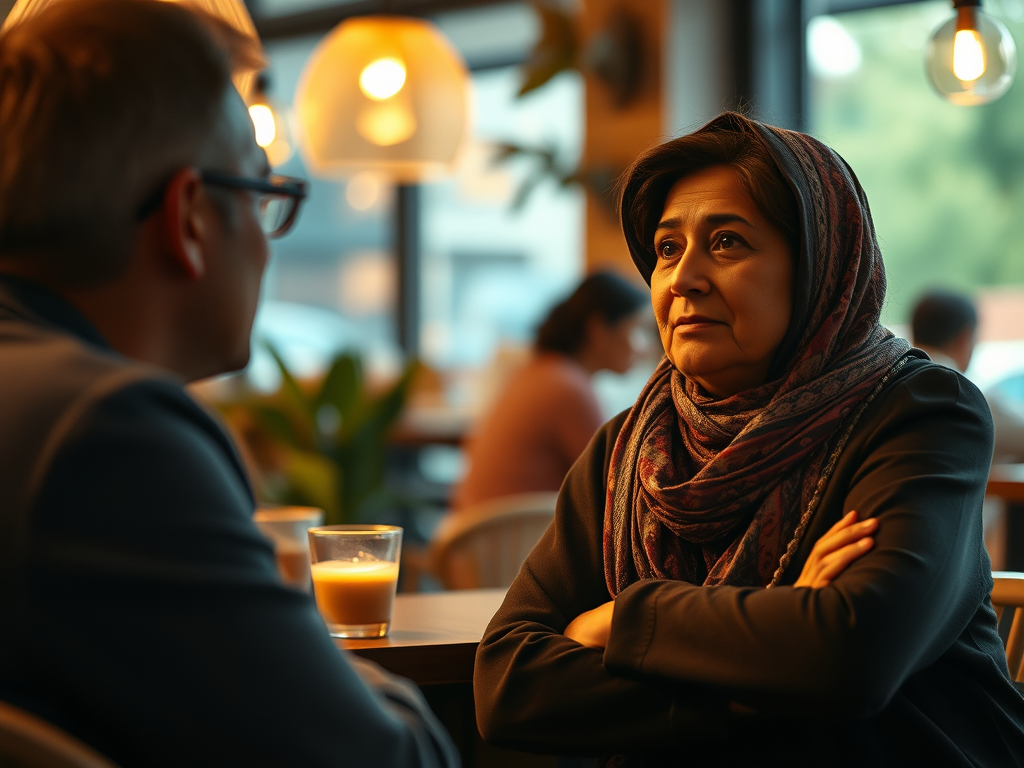
When I met Mahira, she was in her fifties. In her younger days, she emigrated to the United States from the Middle East because of political strife in her country.
When she told me that she was a member of a non-denominational Muslim prayer hall, I was intrigued because up until that moment, I was under the misguided impression that all Islamic faiths are the same.
“Oh no,” Mahira said pleasantly. “There’s many different sects of Islam, but they’re all based on the Quran.”
Knowing that I was about to make my ignorance known, I asked, “Is it just a matter of how they interpret the text that makes them different?”
“That, and if they accept the written Hadith as a legitimate interpretation of Muhammad’s teachings,” she patiently replied.
“What’s Hadith?”
“Hadith is a supplemental guide to the Quran,” she told me. “Some sects follow different pieces of the Hadith while others believe that the Quran is the only reliable source of law.”
“Ah, so it’s kind of like different Christian denominations following different version of bible, or having supplemental books?”
“Yes, it’s very similar.”
“If you don’t mind me asking, was it a conflict between different sects that led to you leaving your country?”
Side note: I’ll admit that I tend to walk headfirst into conversations that many people would find uncomfortable, or even offensive and frankly, I’m proud of it. “Small-talk” is something anyone can do, but only the bravest souls are willing to engage in the “large-talk” that speaks to the core of who a person really is. It’s always something I aspire to do well…
Hence, when Mahira started telling me about how the ruling sect in her native country had banned women from reading books, and that some women had even been put to death for being raped because they may have shown too much skin, or otherwise ‘tempted’ a man inappropriately, I was appreciative of her patience–
“That’s insane!” I declared. “Why do people tolerate that from their government?”
“Well, you have to remember, it’s a very different culture,” she said. “Many women prefer it.”
Mahira went on to tell me that Muslim women often find comfort in the security of being “kept”. She said that in America, women are expected to work and provide just the same as men, which can cause confusion regarding their role in the home.
“There’s simplicity in knowing what’s expected of you,” she explained, “and if you just conform to that expectation, then you won’t have to defile yourself or show off your body to survive. Many Muslims point to gender confusion and sexual immorality in America as evidence that their way is right.”
“Well, what do you think?” I asked.
“I believe that it’s all right because ultimately, it’s all the will of God.”
“So, you’re saying that a woman transitioning into a man, or working in a strip club, for example, is in line with God’s will just the same as women being oppressed in your country is?”
“Yes, exactly! They’re both ruled by fate.”
Now, although she didn’t know it, Mahira had stumbled directly into the realm of the Dantian Project when she mentioned the word “fate.” It’s exactly what I needed to break my writer’s block, and steer the conversation in a slightly different direction.
“So, if everything happens according to fate,” I asked, “do you think that free will actually exists?”
She smiled as though she’d anticipated my question before replying, “Of course we have free will! It’s just that God already knows what choice we’re going to make before we make it.”
I felt my brow shrivel in contemplation as I questioned her further. “Is that still free will, though? Or is that just us experiencing what it’s like to have free will?”
“What do you mean?”
I took a few seconds to organize my thoughts enough to say, “Well, it’s like if we’re reading a book… If we’re in the middle of the story, then we obviously don’t know how it’s going to end, even though it’s already written, right? The whole fun of reading is to experience the story without knowing what comes next. We want to be surprised by the ending.”
“Yes, I suppose it is like that,” she said. “God’s the author, and he created us to be the readers of his story. We get to experience what it’s like to have the freedom of choice–whether that choice is to believe in the freedoms of the United States, or in the rule of Islamic law. Either way, God created us so that he can experience himself without knowing that he’s God.”
“That’s a really interesting point,” I said. “Do you think that God has free-will of his own, then, or does he only experience it through us? Like, is that why he created humans in the first place?”
“Oh, wow,” she replied with a certain enthusiasm that only comes from “large talk” type of conversations. “I believe that God is all around us and all-powerful… He is everything. So, I would have to say that yes… God has free will.”
I suddenly felt like we were at the end of a chess match and the winning move had just presented itself (even though we were both playing from the same side). “Then, here’s a question for you,” I said with a grin. “Do you think that God has the choice to not exist?”
At that, Mahira had no answer.
Obviously, this is something that could be debated until the cows come home… What matters here isn’t so much the answer to that particular question, however, but the implications of someone believes is true or untrue. Depending on which camp you fall into regarding any particular topic, the truth is oftentimes a matter of debate.
I walked away from the conversation that day with quite a bit to think about. Mahira had challenged my concepts of reality just the same as I hope I’d challenged hers. Moreover, we did so without anyone getting offended or upset.
Yet, my biggest takeaway wasn’t the intellectual fodder that I’m still chewing on to this day. It’s the fact that we transcended the rigidity of belief structures in a way that so many religious sects throughout history have failed to do.
We found common ground in the appreciation of curiosity.
Look, whether you believe that the country is heading in the right direction or not, one thing is certain–you’re automatically at odds with anyone who believes something opposite.
That being the case, we know for certain that to reach the “center” in any given issue, we must be willing to put our own beliefs aside. We must be eager to learn from those who can teach us, even when we least expect it. Even when we think we might disagree…
Stay tuned for next week’s article, which will deal with Open AI’s censorship of this exact subject matter. I must be doing something right ;)
The Dantian Project seeks to find common truths in modern issues. Please like, share and subscribe to help the conversation reach as many people as possible! If you’d like to become a contributor, visit the submission guidelines page.





Leave a reply to Dan Cancel reply